
Living the Problem, Building the Solutions
Fiado
By Carmiña De La Peña
October 2025
Picture this: A senior executive at one of the world’s largest banks walks away to join a fintech startup with ten employees. The reason? A $300 billion problem that no one else could solve—and a team uniquely positioned to crack it.
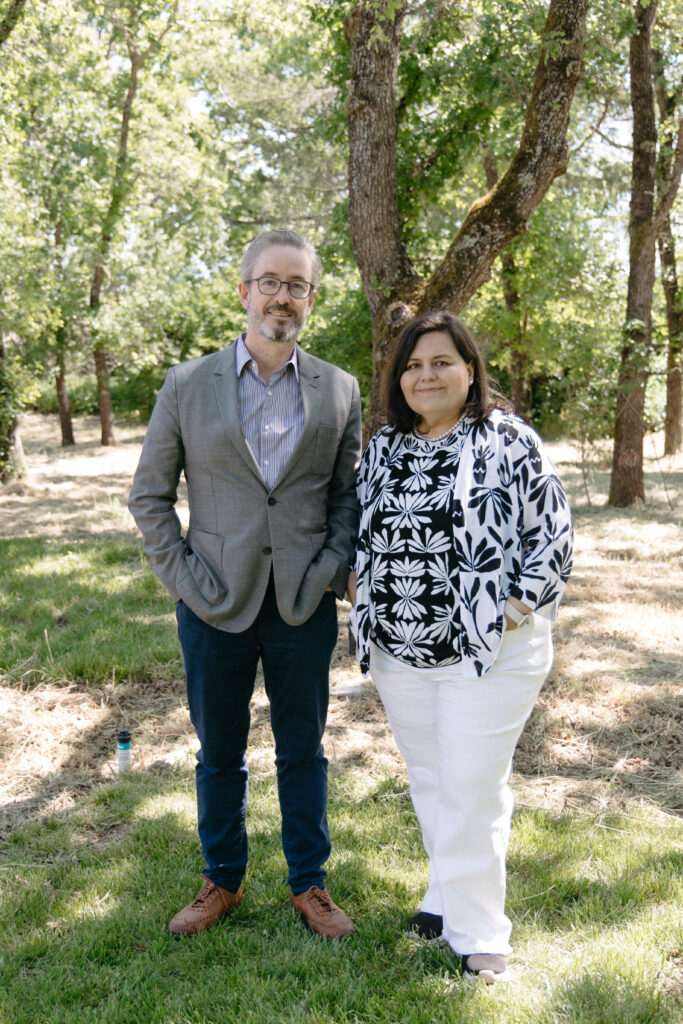
When Jaime Roblesgil joined Silvia Schwartz in this fintech serving first-generation immigrants, he joined a team with a profound understanding of the problem they’re solving—because they’ve lived it.
Fiado was founded to provide banking services for Latinos in the U.S. For them, being an immigrant isn’t just a demographic detail—it’s a strategic advantage. “It’s not just about talking principles of helping people,” explains Jaime, CEO of Fiado. “We’re seeing it every day. When we implement the model, we’re seeing in practice who is using it. And there’s a quite deep identification with the profile of the individual we’re helping.” These cultural touchstones reinforce the mission across the entire organization.
Where others see complexity, Fiado’s team sees opportunity. Their immigrant perspective reveals that fragmentation isn’t just inefficient—it’s expensive. The $60 billion in annual remittances from the U.S. to Mexico represents just 20% of Mexican immigrants’ total wealth generation. The other 80%—roughly $240 billion—remains trapped in a fragmented system that extracts value rather than creating it.
“The pipeline that allows you to see the entire flow from when income is generated until it’s spent didn’t exist until now,” notes Jaime. “Having the complete pipeline, which no one else has been able to do, has incalculable value.”
This vision has been tested in the past. When their banking partner shut down new customer onboarding, the core team endured 13 months of uncertainty while leadership went without salaries. Yet the shared conviction in their mission kept them together—a testament to the power of purpose-driven collaboration.
Competitors have raised millions optimizing individual pieces of the remittance process. But the Fiado team understood something others missed: the real opportunity wasn’t in improving transfers—it was in owning the complete financial pipeline. Their advantage is twofold: infrastructure spanning across countries and a revolutionary debt-to-credit model. While others move money, Fiado is building an entire financial ecosystem.
"Fiado isn’t just poised to capture a market—it is redefining what financial inclusion looks like for millions of immigrants across the U.S.–Mexico corridor."
Their immigrant background provides crucial insight into why previous infrastructure attempts failed. It’s not just a technical challenge—it’s a cultural and trust challenge that requires deep understanding of unique constraints, needs, and behaviors.
Looking ahead, Fiado’s leadership envisions becoming the definitive financial platform for Mexican immigrants—earning their trust as their primary financial partner throughout their American journey. “I want us to be the platform that has the trust of the Mexican immigrant—that’s where I want to be,” explains Jaime.
Fiado represents more than a fintech play. It’s a company where lived experience drives strategy, and where a shared mission binds the team together as they scale. Fiado isn’t just poised to capture a market—it is redefining what financial inclusion looks like for millions of immigrants across the U.S.–Mexico corridor.
This is not just about moving money. It’s about trust, dignity, and building tools that reflect the realities immigrants face every day. By combining personal insight with technical innovation, Fiado is creating financial bridges that didn’t exist before.