
Day Zero Was Years Ago
Taudia
By Jessica Chao, Ph.D. and Jared Campbell
October 2025
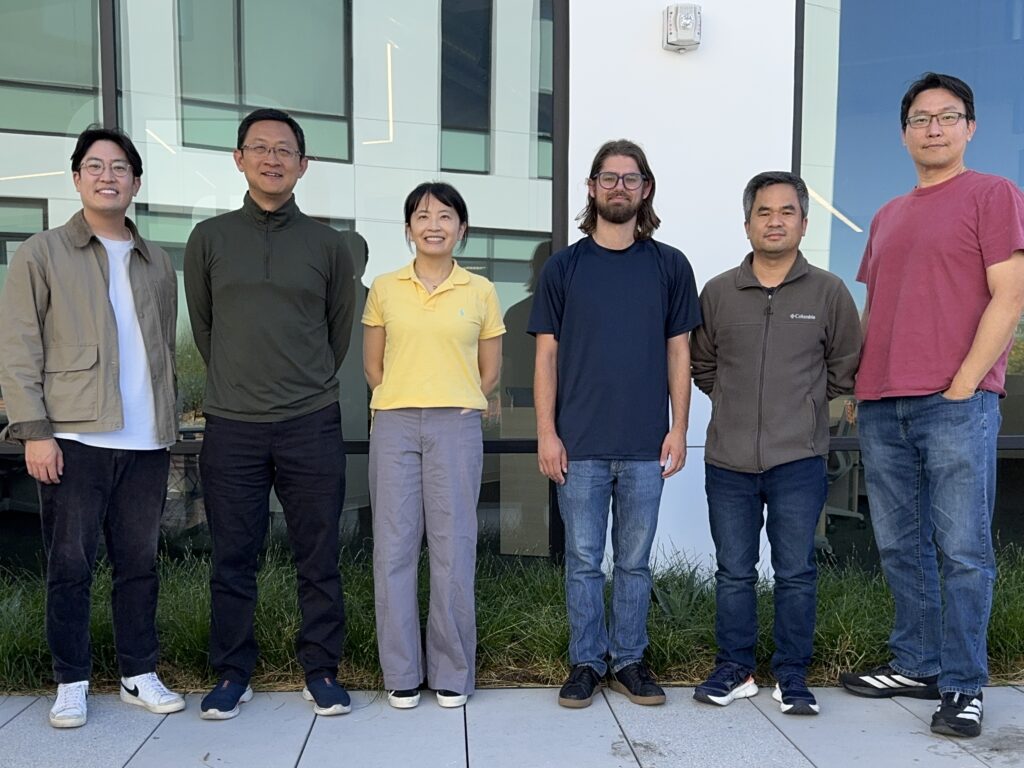
In the high-stakes world of Alzheimer’s diagnostics, where timing can mean the difference between early intervention and irreversible decline, Taudia has found an unusual competitive edge: a founding team that has already weathered two startups and a major acquisition together.
“I feel lucky to have worked with this team across two startups and during our time at Thermo Fisher,” says Paul Hung, Ph.D., reflecting on the journey that brought Taudia’s co-founders together. “After going through so much together, there’s no doubt about trust or communication.” That shared journey included a successful exit when they sold their previous company, Combinati, to Thermo Fisher. Endurance28 was an early investor and partner in Combinati.
This isn’t just startup nostalgia—it’s a strategic advantage that’s propelling Taudia toward their March 2026 product launch at the Alzheimer’s & Parkinson’s Disease Conference in Copenhagen, less than two years after founding. While most early-stage teams spend months navigating the delicate dance of role definition and culture building, Taudia’s founders hit the ground running with established trust and proven collaboration patterns.
Beyond the Typical Team-Building Phase
The impact of this shared history becomes clear when Paul describes what they’ve avoided: “Most new teams spend months sorting out roles, building culture, and figuring out how to make decisions together. We already had that foundation.” This head start has allowed them to move from concept to validated data with remarkable speed in a field where regulatory complexity typically slows progress to a crawl.
Their collective experience at Thermo Fisher provided more than just operational knowledge—it gave them a scalability mindset from day one. As Paul reflects on that period: “If you want to go fast, go alone. If you want to go far, go together.” At Thermo Fisher, they saw what it looks like to operate at a global scale, learning how to coordinate teams across time zones, adapt go-to-market strategies for different regions, and maintain momentum through complex integrations. It’s a perspective most startups develop painfully through trial and error, if at all.
"Most new teams spend months sorting out roles, building culture, and figuring out how to make decisions together. We already had that foundation." - Paul Hung, Ph.D.
The Power of Productive Disagreement
Perhaps most critically, the team has already mastered what Paul calls “disagreeing productively.” Having navigated pivots, product launches, and an acquisition together, they’ve developed the rare ability to challenge each other’s ideas while maintaining forward momentum. This isn’t just about avoiding conflict—it’s about leveraging diverse perspectives to make better decisions faster.
The personal motivation driving the team adds another layer of cohesion. “Several of us, myself included, have close family members living with memory loss and dementia,” Paul shares. This shared purpose, combined with their operational history, creates alignment that goes beyond typical founder dynamics.
Scaling Without Losing Culture
Looking ahead, Paul’s vision for success reveals the team’s sophisticated understanding of sustainable growth: “Over the next three to five years, we want to broaden our assay menu, build strong partnerships that expand our reach, and keep the same culture of teamwork and customer focus we have today.”
That last point—maintaining culture through scaling—reflects hard-won wisdom from their previous ventures. Many startups struggle to preserve their founding DNA as they grow, but Taudia’s leadership has already experienced this challenge and emerged with intact values and working relationships.
“If you want to go fast, go alone. If you want to go far, go together.”
The Network Effect Advantage
Their approach to market entry also demonstrates mature strategic thinking. Rather than pursuing the traditional biotech path of complex diagnostics requiring new infrastructure, they’re leveraging existing PCR capabilities developed during the pandemic. It’s a move that shows both technical sophistication and market awareness—hallmarks of a team that understands how to balance innovation with practical implementation.
For VCs evaluating early-stage opportunities, Taudia represents something increasingly rare: a founding team with both domain expertise and proven ability to execute together. In a sector where most failures stem from team dysfunction rather than technical challenges, that combination of experience and alignment may be their most valuable asset.