
The Call We Had Waited For
Encellin
By Consuelo Valverde
October 2025
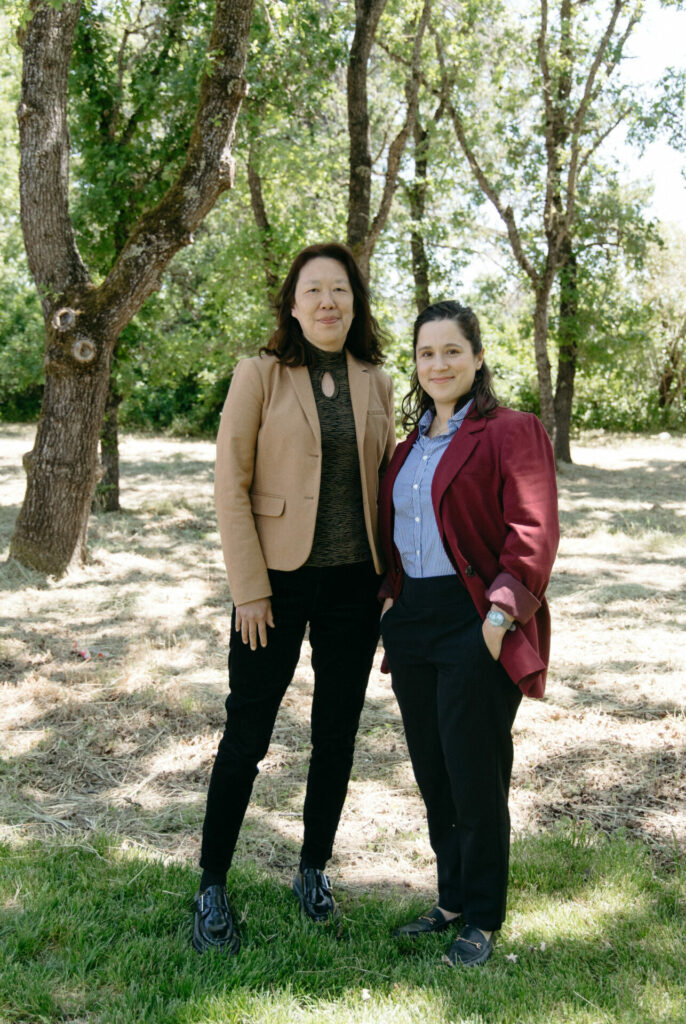
The text lit up like a flare: a donor was available. In that instant, years of work at Encellin telescoped into a single, breath-holding moment—first-in-human was no longer a horizon line but a door swinging open.
“We were both incredibly excited at the realization that we’re about to bring our first therapy to a human—paired with the profound uncertainty of how it will unfold,” says CEO and co-founder Crystal Nyitray, Ph.D. “You’re excited and a little terrified at the same time. That’s exactly the right place to be when you are pushing the boundaries of medicine.”
“You’re excited and a little terrified at the same time. That’s exactly the right place to be when you are pushing the boundaries of medicine.”— Crystal Nyitray, Ph.D.
The Weight of Trust
What made the moment seismic wasn’t just the logistics of a donor; it was the weight of trust arriving with it.
“It’s profoundly humbling when people volunteer not just their time, but their body,” Crystal reflects. “You feel a deep responsibility to the patient, and the donors. These patients are helping us answer questions that will ultimately bring us closer to a functional cure.”
These questions aren’t just scientific curiosity—they’re the reason Encellin was founded: to solve challenges that have blocked cell therapy for decades.
Encellin’s encapsulated cell replacement therapy (ENCRT) combines a novel encapsulation technology with functional cell therapies to treat chronic diseases—starting with endocrine disorders such as type 1 diabetes.
A Partnership at the Core
If ENCRT is the instrument, the donor call was the downbeat. Inside Encellin, the founders’ partnership—Crystal and co-founder Grace Wei, Ph.D.—is the tempo section.
“Grace is a core backbone to what we do,” Crystal says. “She brings a spirit of wanting to bring out the best in people, the best in science, and the best in everything we do. Our values are completely aligned. Our approaches are different, and that makes us stronger as a team—it pushes us to ask better questions.”
Co-founder Grace Wei, Ph.D., has helped steer the company’s bridge from lab to clinic, carrying forward the same spirit that launched their collaboration: How can I help?
“Grace is a core backbone to what we do. She brings a spirit of wanting to bring out the best in people, the best in science, and the best in everything we do.” — Crystal Nyitray, Ph.D.
Facing the Unknown
Before that first implant, the team spent years interrogating failure points that have stalled cell therapies—immune rejection, fibrosis, poor engraftment—and engineered a technology around the biological reality that living cells need a “superhighway” of nutrients and exchange.
Crystal recalls that when she and her team surveyed the field, the same obstacles appeared again and again: immunosuppression and fibrosis. “We took the approach of: if the cells don’t survive, nothing else matters,” she says. “And we saw very early on that if you don’t address engraftment, it doesn’t matter.”
What struck Crystal most was that the problem wasn’t hidden. “Honestly, it’s a little shocking, because billions of dollars have gone into cell development, but when it comes to the body, the approach has often been: inject it and hope for the best. That overlooks the complexity of human tissues and cells,” she says.
She believes that mindset came from the way medicine has traditionally worked. “Medicine has long relied on oral and intravenous drugs, and some have applied that same mindset to cell therapy: just give it and hope for the best. But cells aren’t chemicals, they’re living factories that require a far more sophisticated dialogue with the body.”
Other efforts tried to work around the problem with large devices or complex infusions, but none solved the underlying barrier of engraftment. That recognition—that survival and integration are the true bottlenecks—became the foundation for Encellin’s therapy, and the reason the company designed its encapsulation approach to prioritize engraftment above all else.
From Chemistry to Cells
Crystal’s training as a chemist gave her a unique lens.
“I came to UCSF thinking about how do we support the development of novel therapeutics to address hard-to-dose patients?” she recalls. “There are so many disease states where we have great drugs—we’re just not good at delivering them effectively. From a chemistry perspective, it’s a real shame, because you probably have hundreds to thousands of drugs that can’t advance further, not because they don’t work, but because we can’t dose them effectively.”
“It’s really a question of how we can democratize those transplants in a meaningful way. Not with sci-fi concepts or burdensome surgical complications, but by thinking of cells as drug factories—living medicines that can reach more people.” — Crystal Nyitray, Ph.D.
That mindset led her to a deceptively simple idea: “How can we support therapeutic delivery of drugs, very simply?” she asked herself. Crystal explains: “That’s how we came up with the cell-based approach—because cells are so good at detection and secretion of biomolecules. It seems like a no-brainer. Our body’s doing it all the time. Let’s just harness that capability and use it to our advantage.”
In Encellin’s framing, cells are “smart molecular factories,” delivering therapy as needed. It’s a deceptively simple promise rooted in more than a decade of work that began at UCSF, and it evolved into a minimally invasive implant designed to help cells engraft and thrive. Unlike some earlier approaches, which required large or even multiple implants in a single patient, Encellin’s therapy was built around a smaller, simpler delivery—one that put the biology, not the hardware, at the center.

But Crystal also recognized a larger challenge: transplants have existed for decades, yet remain limited to a small number of patients. “It’s really a question of how we can democratize those transplants in a meaningful way,” she says. “Not with sci-fi concepts or burdensome surgical complications, but by thinking of cells as drug factories—living medicines that can reach more people.”
It was this chemist’s lens—thinking about cell therapy as drug delivery, and as a path to broader access—that set Encellin apart.
Unlocking a New Paradigm
With the first donor, the work became human in a new way. The founders describe it as a partnership—patients, donors, clinicians, engineers—bound by trust and the shared intent to move medicine forward.
“At some point, you have to take the leap and put it in a human,” Crystal says. “But the bar we ask ourselves is, ‘Would I put this in my grandma?’ We’re conservative on that front—and that’s okay.”
Five years from now, Crystal hopes this instant will be remembered as an unlocking: proof that cells can be kept alive and functional inside a protected pouch, turning the body into a host for precisely dosed, living therapeutics.
“If you can do that,” she says, “the sky’s the limit.”